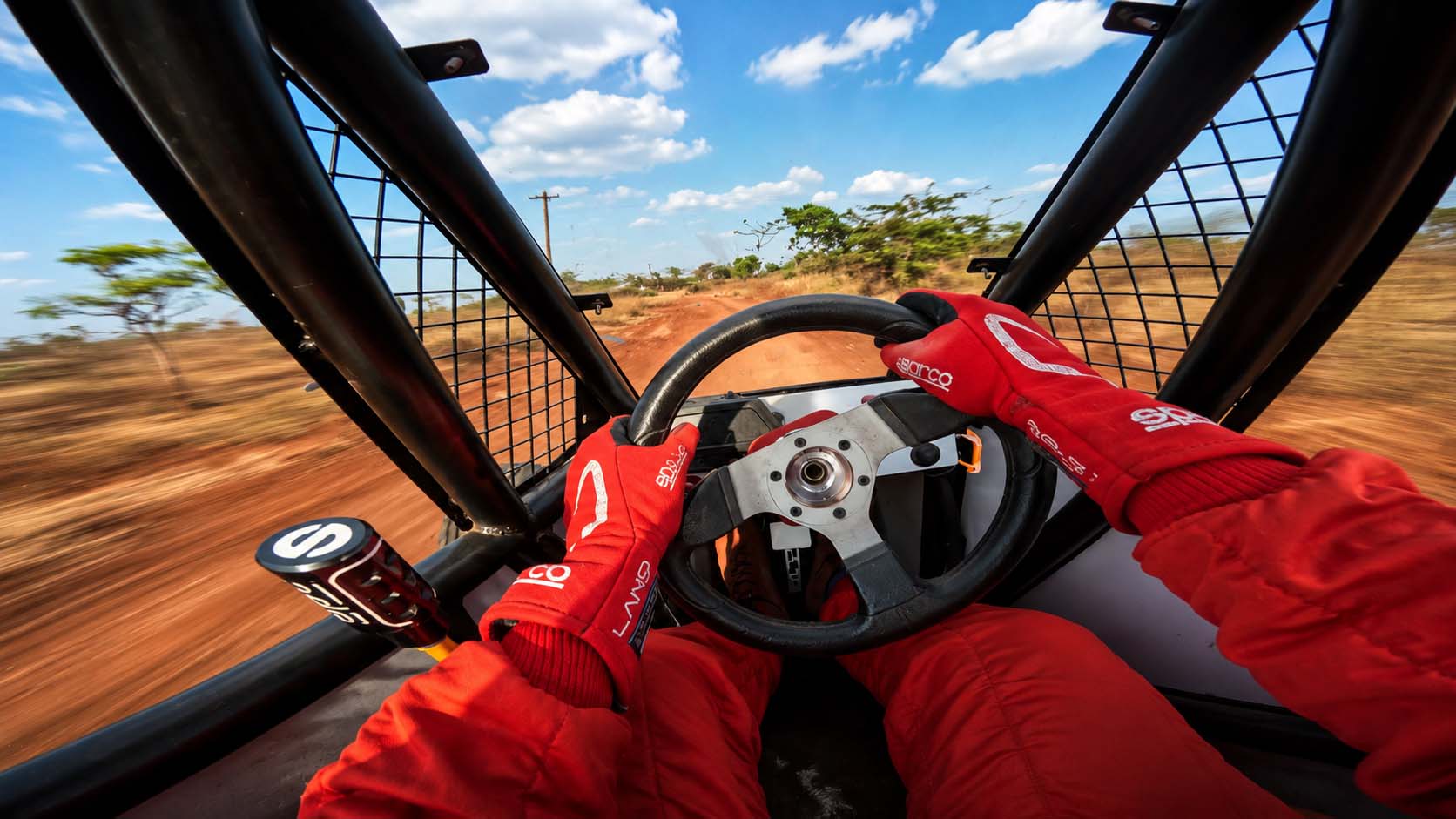
In 1982, a Swedish trials rider named Erland Andersson built a vehicle unlike anything in competitive motorsport at the time. His aim was simple: something fast enough to race seriously, inexpensive enough to be accessible, and simple enough that a driver without factory support could prepare and maintain it. He called it a Crosskart.
Over the four decades that followed, what Andersson built in a Swedish workshop became one of the most widely raced grassroots motorsport categories in the world. From Sweden, the Crosskart spread to Norway and Finland through the late 1980s and 1990s. It crossed into Estonia, Latvia, and Lithuania through the 2000s. By the mid-2000s, the North European Zone (NEZ) Crosskart Championship had formalised the category under FIA-governed regulations, uniting drivers from six countries in structured competition on rallycross-style loose-surface circuits.
National Crosskart championships now run annually in Finland, Sweden, Norway, Estonia, Latvia, and Lithuania. Junior categories within the NEZ series accept competitors from the age of six. In southern Europe, a closely related format — kartcross — operates with higher-powered engines across France, Belgium, and the Netherlands. In the United States, a domestic Crosskart community has built its own competition infrastructure independently.
Until 2026, India had none of this. Kari Sports has changed that.
Why Crosskart grew — and why it matters
The reason Crosskart spread the way it did across Europe is not complicated. The original design principle — affordable, maintainable, genuinely competitive — was also the right formula for building a motorsport category that could grow beyond a single country’s borders. A Crosskart is accessible to build, accessible to run, and technically demanding enough that serious drivers take it seriously.
In Finland, Sweden, Norway, and the Baltic nations, Crosskart became a pillar of the local motorsport ecosystem because it solved a problem that every racing culture faces: how do you offer real competition to a driver who doesn’t have a factory behind them?
The NEZ series today draws drivers across age groups and experience levels. Its junior classes feed into senior competition. Its senior competitors develop the loose-surface car control and racecraft that transfers directly to national rally championship level. The category is, by design and by track record, a starting point — not a ceiling.
The gap India carried
Indian motorsport has lived with a version of this problem for years.
At the top, the Indian National Rally Championship is a serious, well-run national series — but its cost structure places it beyond reach for any driver without professional backing or significant private funding. Below INRC, the structured entry points have been limited. Go-karting on smooth asphalt circuits teaches mechanical inputs but not loose-surface car control. There has been no Indian equivalent of what the NEZ Crosskart Championship provides in Europe: a documented, affordable, technically demanding entry into competitive rally driving.
That gap is what Kari Sports has spent two years engineering an answer to.
The Sami’s XK-01 — India’s first Crosskart
The Sami’s XK-01 is the car Kari Sports built to launch the Crosskart category in India. It was designed and engineered at the Kari Sports facility in Coimbatore — the same operation that, since its founding in 2004, has built over 200 rally cars and developed national championship-winning drivers across two decades of Indian motorsport.
The XK-01 is powered by a 400cc Dominar engine producing 120 to 130 horsepower in a closed-cockpit chassis weighing 320 to 350 kilograms. The closed cockpit carries a full roll cage and competition harness built to motorsport safety specification. The power-to-weight ratio — approximately 370 horsepower per tonne — produces the kind of performance on a loose surface that no road vehicle in India replicates.
The car was not reverse-engineered from a European specification. It was designed from first principles in Coimbatore, drawing on Kari Sports’s two decades of rally car construction to build something that performs to international Crosskart standards while being engineered for Indian terrain, Indian conditions, and Indian competition.
The name is deliberate. The XK-01 is named the Sami’s, in continuation of the naming tradition that Kari Sports has carried since its founding — honouring the people who shaped the motorsport culture the company was built inside.
A category, not a product
A car alone is not a category. What Kari Sports has introduced with the Sami’s XK-01 is not a new product in the Indian market — it is a new category of motorsport. The difference matters. A product is bought and used. A category grows, produces results, develops drivers, and builds a competition culture over time.
In Europe, the Crosskart went from Erland Andersson’s workshop to a six-nation international series in roughly two decades. The category grew because the car worked and the racing was real — not because it was marketed, but because drivers who competed in it came back, and brought others.
Kari Sports is not starting that process from nothing. The engineering expertise exists. The driving instruction exists. The understanding of what Indian loose-surface competition demands has been built across two decades of rally car construction. What begins with the XK-01 in India in 2026 is what began in Sweden in 1982: a category that earns its place in motorsport by producing competition that is genuinely worth having.
The Crosskart has arrived in India. The question is which Indian drivers will be the first to build careers on it.